

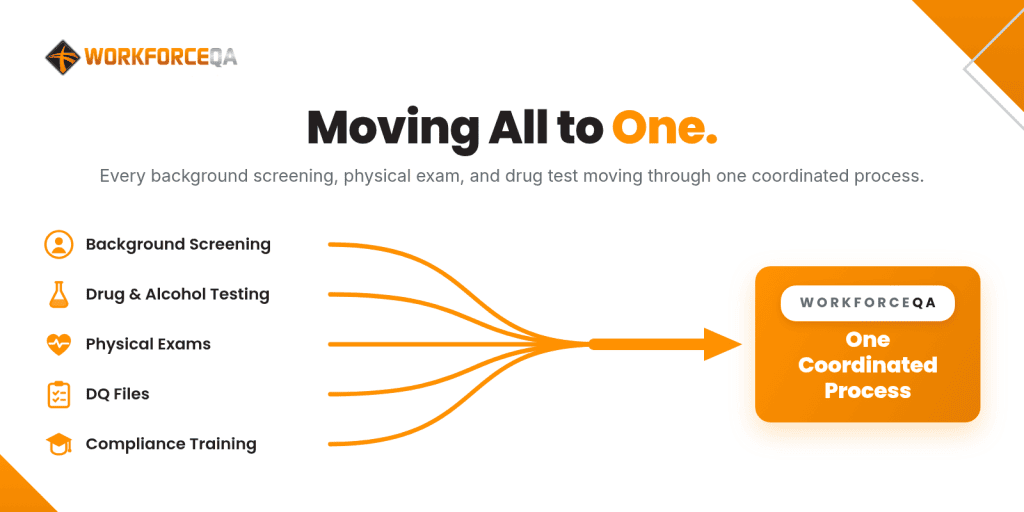
Preparing a new employee for work has become increasingly complex. Before an employee’s first day, organizations often need to complete a series of important requirements, including background screening, physical examinations, drug testing, employment verification, and other job-specific evaluations.
Each requirement serves an important purpose. Background screening helps organizations make informed hiring decisions. Occupational health services help determine an employee’s ability to perform the essential functions of a position safely. Drug testing supports workplace safety initiatives and regulatory obligations. These activities protect both employers and employees while helping organizations build a workforce they can trust.
Despite their shared objective, these requirements are frequently managed as separate processes. Different providers, different systems, and different communication channels often require hiring teams to coordinate information across multiple sources before they can confidently determine whether an employee is ready to begin work.
The challenge, therefore, is not the individual requirements themselves. It is the effort required to manage them collectively.
When Individual Processes Become an Operational Challenge
Most organizations have established procedures for ordering background screenings, scheduling physical examinations, and administering drug tests. Individually, these activities are familiar and generally well understood.
Complexity emerges because each activity often progresses independently.
A recruiter may receive confirmation that a background screening has cleared while occupational health is still waiting to complete a physical examination. Drug testing may be managed through another provider with its own reporting process. Hiring managers, operations leaders, and HR professionals each need visibility into different parts of the process, yet the information they need is often distributed across multiple systems.
As hiring activity increases, so does the administrative effort required to monitor progress, identify outstanding requirements, and coordinate communication among everyone involved.
Organizations rarely intend to create fragmented hiring processes. Fragmentation often develops naturally as individual services are added over time to address specific business needs.
Coordination Creates Visibility
Organizations frequently look for ways to improve visibility into the hiring process. Dashboards, reports, and notifications all provide valuable information, but they do not solve the underlying challenge if the work itself remains disconnected.
Visibility is most effective when it is the natural result of a coordinated process.
When background screening, physical examinations, and drug testing move together instead of through separate workflows, hiring teams gain a clearer understanding of each employee’s progress without having to assemble information from multiple sources. Questions that once required emails, phone calls, or multiple system logins become easier to answer because the underlying process has been designed to work as a whole.
The result is not simply better reporting. It is greater operational clarity.
A Coordinated Process Reduces Administrative Burden
Every disconnected workflow introduces additional administrative effort. Hiring teams spend time following up with providers, checking the status of individual requirements, updating hiring managers, and confirming that every step has been completed before an employee begins work.
While each task may require only a few minutes, the cumulative effort becomes significant across dozens or hundreds of hires.
A coordinated process reduces this administrative burden by allowing organizations to manage related hiring requirements within a more unified experience. Rather than spending valuable time connecting individual activities, hiring teams can focus on moving employees through the hiring process with greater confidence and consistency.
The objective is not to eliminate necessary requirements. It is to simplify how those requirements are managed.
Building a More Connected Hiring Process
Organizations will continue to rely on background screening, occupational health services, and drug testing because each plays an important role in preparing employees for work. The opportunity is not to reduce these requirements, but to manage them more effectively.
At WorkforceQA, we believe hiring becomes more efficient when these activities are coordinated rather than managed independently. By bringing background screening, occupational health, drug testing, and related employment services together through connected technology and experienced partnership, organizations gain greater visibility into the hiring process while reducing the administrative effort required to keep it moving.
The result is a hiring experience that is easier to manage, easier to monitor, and ultimately more effective for everyone involved.
WorkforceQA: Helping Employers Navigate Employee Screening Coordination
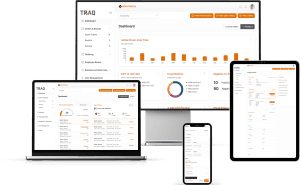
Through the TRAQ platform, employers can manage background screening, drug and alcohol testing, occupational health services, and workforce compliance activities through one secure platform.
One Platform. One Partner. Complete Workforce Compliance.
Ready to simplify background screening compliance? Contact WorkforceQA to learn how our FCRA-compliant screening solutions and TRAQ platform can help your organization manage hiring compliance across all 50 states.