


By: Cindy Faber, Occupational Health Advisor, WorkforceQA
As temperatures rise, so do the risks for employees who work outdoors, drive commercial vehicles, or perform physically demanding jobs. Heat, humidity, dehydration, and fatigue can impact employee health, reduce productivity, and increase the risk of workplace incidents.
For employers, summer worker safety requires more than reminding employees to drink water. It requires a proactive approach to protecting workforce health, identifying potential risks, and ensuring employees are medically prepared to perform their jobs safely in challenging environments.
Through comprehensive occupational health services, employers can support employee wellness, maintain compliance, and reduce workplace risks. WorkforceQA helps organizations protect their workforce with nationwide occupational health solutions, including employee physicals, DOT physicals, clinical testing, and health screening services designed to support safer, healthier workplaces.

Why Workplace Heat Safety Matters
Each summer, workers across industries face increased exposure to heat-related hazards. Employees in transportation, construction, utilities, warehousing, manufacturing, and other safety-sensitive industries are especially vulnerable when working in high temperatures or humid conditions.
Heat-related illnesses can result in:
- Reduced concentration and slower reaction times
- Increased risk of workplace injuries
- Fatigue and decreased productivity
- Medical emergencies requiring treatment
- Lost workdays and increased workers’ compensation costs
A comprehensive workplace heat safety program helps employers reduce these risks while demonstrating a commitment to employee health and safety.
Workplace Heat Safety Starts with Prevention
An effective workplace heat safety program goes beyond encouraging employees to drink more water. Employers should implement proactive measures that help prevent heat-related illnesses before they occur.
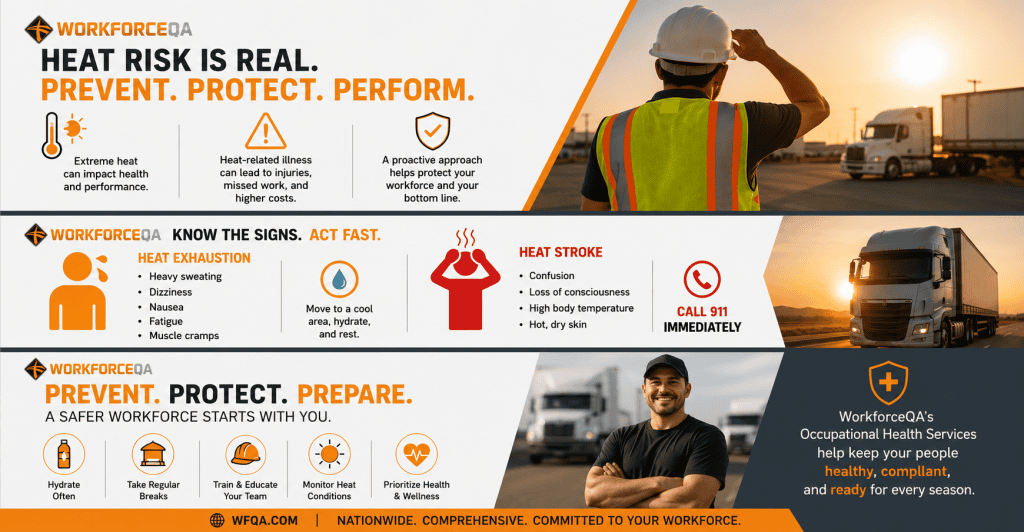
Key workplace heat safety practices include:
- Providing adequate hydration throughout the workday
- Scheduling regular rest breaks in cool or shaded areas
- Gradually acclimatizing new and returning employees to hot working conditions
- Training supervisors and employees to recognize the warning signs of heat exhaustion and heat stroke
- Monitoring weather conditions and adjusting workloads during periods of extreme heat
These simple but effective strategies can significantly reduce heat-related incidents, improve employee well-being, and support a safer, more productive workforce.
For official workplace heat safety guidance, employers can reference resources from the Occupational Safety and Health Administration (OSHA) and the Centers for Disease Control and Prevention (CDC) National Institute for Occupational Safety and Health (NIOSH):
- OSHA Heat Illness Prevention: https://www.osha.gov/heat-exposure
- CDC/NIOSH Heat Stress Guidance: https://www.cdc.gov/niosh/heat-stress/about/index.html
Recognizing Heat-Related Illness
Understanding the signs of heat-related illness allows supervisors and employees to respond quickly and prevent serious medical emergencies.

Heat Exhaustion
Heat exhaustion occurs when the body loses excessive fluids and electrolytes through sweating.
Common symptoms include:
- Heavy sweating
- Dizziness/lightheadedness
- Nausea
- Headache
- Muscle cramps
- Rapid heart rate
- Fatigue
If an employee shows signs of heat exhaustion, move them to a cool location, encourage fluids, and allow them to rest.
Heat Stroke
Heat stroke is a life-threatening condition that occurs when the body’s temperature regulation system fails.
Warning signs include:
- Confusion
- Slurred speech
- Loss of consciousness
- Extremely high body temperature
Heat stroke requires immediate medical attention. Call 911 immediately if heat stroke is suspected.
Hydration Plays a Critical Role in Summer Worker Safety
Dehydration affects more than physical performance – it can impact concentration, alertness, reaction time, and decision-making.
For commercial drivers, construction workers, and employees operating vehicles or heavy equipment, proper hydration is an important part of workplace safety. Even mild dehydration can negatively affect the ability to perform safety-sensitive tasks.
Signs of dehydration include:
- Excessive thirst
- Dry mouth
- Fatigue
- Dizziness
- Confusion
- Increased heart rate
- Less frequent urination
Providing accessible drinking water and scheduling hydration breaks can help reduce heat-related incidents and support overall employee health.
Hydration Best Practices
- Drink water consistently throughout the day
- Replace electrolytes during prolonged heat exposure or strenuous activity
- Eat water-rich foods e.g. watermelon, cucumbers, strawberries, & grapefruit
- Limit high-sodium foods
- Reduce excessive caffeine and sugary beverages
- Avoid alcohol before and during work periods
How WorkforceQA Supports Employee Health and Workplace Safety
Preventing workplace injuries and health-related incidents begins long before an employee steps onto the job site. A proactive occupational health services program helps employers identify potential risks, support employee readiness, and ensure workers are medically prepared to perform their essential job functions safely.
WorkforceQA’s Occupational Health Services help employers build healthier, safer workforces through comprehensive medical screening and health management solutions, including:
- DOT and non-DOT physical examinations
- Employee physicals for pre-employment and ongoing workforce health needs
- Pre-employment and fit-for-duty evaluations
- Respirator medical evaluations
- Vision and hearing testing
- Nationwide occupational health clinic access
- Medical record management and scheduling through the secure TRAQ platform
By partnering with WorkforceQA, employers gain access to a nationwide network of occupational health providers while simplifying the management of employee physicals, medical evaluations, and health screenings. Through TRAQ, organizations can streamline scheduling, track compliance requirements, monitor workforce health status, and manage occupational health processes through one secure platform.
Protect Your Workforce This Summer
Summer does not have to mean increased injuries, medical events, or lost productivity.
By implementing workplace heat safety practices, promoting hydration, educating employees about heat-related illnesses, and partnering with a trusted provider of occupational health services, employers can create safer workplaces and healthier teams.
Whether your organization needs DOT physicals, employee physicals, fit-for-duty evaluations, or comprehensive occupational health solutions, WorkforceQA provides the expertise, technology, and nationwide resources needed to keep your workforce healthy, compliant, and ready for work.
Contact WorkforceQA today to learn how our occupational health services can help protect your workforce this summer—and throughout the year.