

Why Meeting Minimum Background Check Requirements May Not Be Enough
In hiring, many employers view background screening as a regulatory requirement—a box to check before extending a job offer. But treating background checks as a formality can leave businesses exposed to risks that a more thoughtful screening strategy could help address.
A well-designed background screening program goes beyond meeting minimum requirements. It helps employers make informed hiring decisions, protect their employees and customers, and strengthen workplace safety.
For organizations in transportation, healthcare, aviation, and other safety-sensitive industries, the stakes can be particularly high. The right screening strategy can help identify relevant risks before they become workplace incidents, costly hiring mistakes, or potential negligent hiring claims.
Beyond Compliance: The Real Purpose of Background Screening
Regulations established by agencies such as the Department of Transportation (DOT) and the Federal Aviation Administration (FAA) set specific requirements for certain roles and industries. Meeting those requirements is essential, but a regulatory minimum may not address every risk associated with a particular position.
Employers should evaluate their screening programs based on the responsibilities of each role, the risks involved, and the information needed to make sound hiring decisions.
A comprehensive approach can help businesses:
- Strengthen workplace safety. Relevant criminal history, motor vehicle records, drug and alcohol testing, and applicable safety records can help employers assess risks associated with safety-sensitive positions.
- Reduce the costs of a bad hire. Verifying employment history, education, credentials, and professional licenses can help identify discrepancies before they affect productivity, retention, or operations.
- Protect brand reputation. Hiring decisions can affect customers, employees, business partners, and public trust. A consistent screening process helps organizations make more informed decisions about whom they bring onto their teams.
- Verify qualifications. Employment and education verifications, professional license checks, and references can help confirm that candidates have the experience and credentials required for the job.
- Support defensible hiring decisions. Consistent screening practices, documented procedures, and appropriate evaluation of results can help employers demonstrate that their decisions were thoughtful, job-related, and aligned with company policy.

The goal isn’t to run every possible check on every applicant. It’s to determine which checks are appropriate for each position and apply them consistently.
The Risks of Doing Only the Bare Minimum
When screening programs focus exclusively on checking regulatory boxes, employers may overlook information that could be important to a hiring decision.
1 – Relying on Incomplete Criminal History Information
A national criminal database search can be a useful starting point, but it should not automatically be treated as a complete criminal history report. Database information may have gaps, and record availability varies by source and jurisdiction.
Depending on the role and applicable laws, a more comprehensive program may include county, state, and federal criminal record searches, along with other relevant searches based on the candidate’s history and the position’s requirements.
Employers should work with a qualified screening provider to determine which searches are appropriate and how results should be verified and evaluated.
Just as important, criminal history must be considered in a lawful, job-related manner. The Equal Employment Opportunity Commission (EEOC) explains that employers should consider factors such as the nature of the offense, the time that has passed, and the nature of the job when evaluating criminal records.
The takeaway: A broader search strategy can provide more relevant information, but more screening is not automatically better. The objective is to obtain accurate, job-related information and use it appropriately.
2 – Overlooking Employment and Education Discrepancies
A candidate’s resume provides an important introduction, but employers may need to verify the details before making a final hiring decision.
A January 2025 ResumeBuilder.com survey of 2,000 Americans who had applied for jobs found that 24% of respondents admitted to lying on their resumes. The most frequently reported misrepresentations involved years of experience, skills and abilities, and the length of previous employment.
These findings highlight why employment and education verification can be valuable components of a screening program, particularly when experience, training, or credentials are essential to job performance.
For example, an employer hiring a transportation manager may need to verify relevant industry experience, while a healthcare organization may need to confirm professional licenses or educational qualifications.
Verification helps employers make decisions based on confirmed information, not assumptions.
3 – Treating Drug and Alcohol Testing as a Standalone Process
For transportation companies and other employers with safety-sensitive positions, drug and alcohol testing is an important part of workforce risk management.
However, testing alone does not provide a complete picture of a candidate’s qualifications or suitability for a role. Employers may also need to evaluate driving records, applicable safety records, employment history, and other job-related information.
For regulated transportation employers, this may include applicable DOT requirements, motor vehicle record checks, and driver qualification file requirements.
Connecting these processes helps employers manage screening, testing, and required documentation more consistently.
4 – Failing to Revisit Screening After Hire
Pre-employment screening is only one stage of the employee lifecycle. Depending on the position, industry, and applicable laws, employers may also need processes for periodic checks, license renewals, ongoing monitoring, or other post-hire requirements.
For example, transportation employers may need to track driver qualification documentation and applicable testing requirements. Employers with licensed professionals may need to monitor credential expiration dates.
Without a clear process for managing these responsibilities, employers can overlook important requirements.
A well-structured program helps employers determine what to check, when to check it, and how to document completion.
Building a More Effective Background Screening Strategy
Moving beyond a check-the-box approach doesn’t mean screening every applicant for everything. It means building a program around the organization’s actual hiring needs and risk profile.
Here are four ways to get started.
1 – Customize Screening by Role
Different positions carry different responsibilities and risks. A corporate administrative role may require a different screening package than a commercial driver, healthcare professional, or employee with access to sensitive facilities or information.
Develop screening packages based on job responsibilities, applicable regulations, and legitimate business needs. Establish clear criteria for each role and apply them consistently.
Review the program periodically as job responsibilities, regulations, and business needs change.
2 – Use a Multilayered Approach
A comprehensive screening program may combine several services, depending on the position:
- Criminal background searches appropriate to the role and jurisdiction.
- Employment and education verifications.
- Professional license and credential verifications.
- Motor vehicle records and applicable driver safety records.
- DOT and non-DOT drug and alcohol testing, as appropriate.
- Ongoing monitoring or recurring checks when appropriate and legally permissible.
Each component serves a different purpose. Together, they can give employers a more complete, relevant view of an applicant’s qualifications and potential risks.
3 – Establish Consistent, Documented Procedures
A screening program is only as effective as the process supporting it.
Employers should establish written policies that define which checks apply to each position, who reviews results, how they handle discrepancies, and how they document decisions.
They must also follow applicable federal, state, and local requirements. When using a third-party background screening company, this includes relevant Fair Credit Reporting Act (FCRA) obligations, such as disclosure and authorization requirements and applicable pre-adverse and adverse action procedures.
Criminal history decisions should also comply with applicable nondiscrimination requirements. A record should not automatically disqualify someone from employment without appropriate consideration of the job, the information, and the laws that apply.
Clear procedures help support consistency, accountability, and more defensible hiring decisions.
4 – Connect Screening With Your HR Systems
Manual processes can create delays, duplicate work, and documentation gaps, especially when multiple vendors handle background screening, drug testing, occupational health, and compliance requirements.
Integrating screening with an applicant tracking system (ATS) or human resources information system (HRIS), where supported, can help streamline workflows, improve visibility into order status, and reduce repetitive administrative tasks.
Centralized reporting can also make it easier for HR and compliance teams to track outstanding requirements, identify bottlenecks, and maintain audit records.
The objective is to make screening a consistent part of the hiring workflow—not a disconnected task that HR must manage separately.
How WorkforceQA Helps Employers Move Beyond the Minimum
WorkforceQA (WFQA) helps employers build screening and compliance programs that align with their workforce, industry, and operational needs.
Rather than treating background screening as an isolated service, WFQA brings together key elements of workforce screening, safety, and compliance through its TRAQ platform and integrated service offerings.
Depending on the employer’s needs, services can include:
Comprehensive background screening. Criminal record searches, employment and education verifications, professional license checks, and other screening services help employers evaluate applicants against established, job-related criteria.
Drug and alcohol testing. DOT and non-DOT testing services support employer testing programs, including applicable requirements for regulated and safety-sensitive workforces.
Transportation screening and compliance support. Motor vehicle records, driver qualification file services, and related support help transportation employers manage important elements of driver qualification and ongoing compliance.
Occupational health services. Services such as DOT physicals, fit-for-duty evaluations, and other occupational health offerings help employers coordinate applicable workforce health requirements.
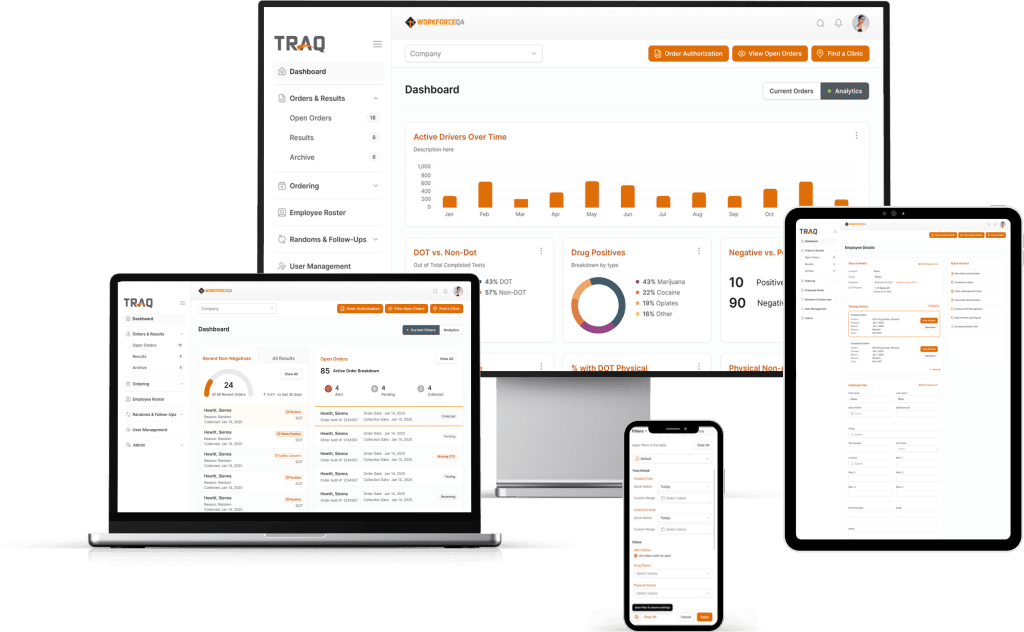
Connected workflows through TRAQ. WFQA’s TRAQ platform brings screening, drug and alcohol testing, occupational health, and reporting into one connected environment. This helps employers and HR teams gain visibility into service status and manage multiple workforce requirements more efficiently.
WFQA also works with employers to tailor screening programs to their specific needs, rather than relying on a single package for every position.
For organizations managing large workforces, regulated roles, or multiple screening requirements, this coordinated approach can reduce administrative complexity and help create a more consistent process from pre-employment screening through ongoing workforce management.
Make Screening a Strategic Hiring Decision
Background screening should be more than a final administrative step before someone starts work. It should be part of a broader strategy for protecting employees, customers, and business operations.
Meeting regulatory requirements remains essential, but employers should also consider whether their current screening practices provide the information needed to make informed hiring decisions.
Are you relying on a single criminal database search? Are you verifying employment and credentials when appropriate? Are screening requirements consistent across similar positions? Can your team easily track outstanding checks, testing requirements, and documentation?
If the answers reveal gaps, it may be time to reassess your approach.
WorkforceQA can help you evaluate your current screening process and build a program aligned with your workforce needs, safety priorities, and compliance responsibilities.
Contact WorkforceQA to learn how our background screening, drug and alcohol testing, occupational health, and TRAQ platform can help bring your workforce screening and compliance processes together
Would your driver hiring process hold up under scrutiny?
WEBINAR: Built to Hold Up: Reducing Negligent Hiring Risk in the Trucking Industry
Join WorkforceQA’s Marc Bourne and Bianca Lager, alongside attorney Todd Higey, for a practical look at negligent hiring risk in trucking. You’ll learn the red flags, legal standards, and screening and documentation steps that help build a hiring process that holds up when it matters.
October 29 | 1:00 p.m. ET | 1 SHRM PDC