– Andrew Holtz, D.O. | Medical Review Officer
Overview
Employment-related drug testing is a common part of workplace compliance programs in the United States. With millions of tests conducted annually, some results will be reported as positive. Understanding what happens next can help reduce confusion and stress for individuals and employers alike.
A positive laboratory result does not automatically mean a failed drug test. There is a standardized process designed to ensure accuracy, fairness, and protection of medical privacy.
Your Drug Test Is Positive – Now What Happens?
Each year, millions of employment-related drug tests are collected and analyzed across the United States. According to the Quest Diagnostics Drug Testing Index, one of the most comprehensive annual industry reports, nearly 9.8 million workplace drug tests were conducted and analyzed in 2023 alone. These tests included pre-employment, random, post-accident, and other employment-related testing categories. When factoring in testing performed by other laboratories, the actual number of tests is significantly higher.
Given this volume, it is common for individuals to undergo an employment-related drug test—and inevitably, some results are reported as positive.
How Common Are Positive Drug Test Results?
The Quest Diagnostics Drug Testing Index reported a 4.6% workplace drug test positivity rate in 2023, consistent with rates seen in 2021 and 2022. These figures represent some of the highest positivity rates observed in the past 20 years. When an employment-related drug test returns a positive laboratory result, the next steps depend on the employer’s drug testing policy, the type of test conducted, and applicable federal or state regulations. However, there is a standard process followed throughout the United States.
A Positive Lab Result Is Not Immediately Reported to the Employer
An initial laboratory screening result is not automatically reported to the employer as positive. Before any result is finalized, several safeguards are put in place to ensure accuracy and fairness.
First, the laboratory performs confirmation testing using mass spectrometry, a highly specific and accurate analytical method. This confirmation process distinguishes between substances with similar chemical structures and identifies the exact drugs and metabolites present in the specimen. Only after confirmation testing is completed are the results forwarded to a Medical Review Officer (MRO).
The Role of the Medical Review Officer (MRO)
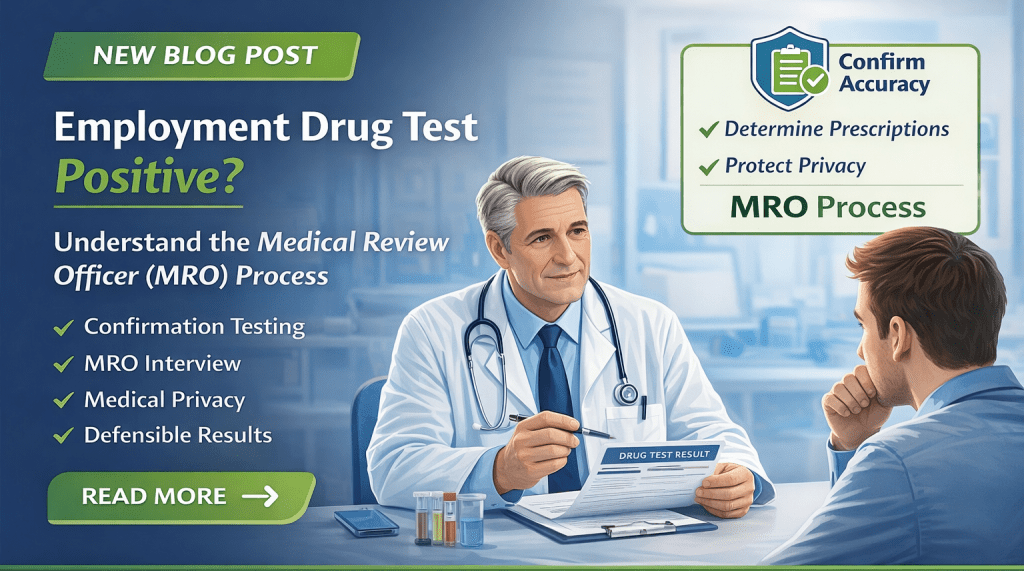
The Medical Review Officer plays a critical role in the drug testing process. The MRO is responsible for determining whether there is a legitimate medical explanation for the confirmed positive result, such as a valid prescription medication or recent medical treatment.
The MRO or a trained MRO assistant will contact the individual confidentially to conduct a medical review interview. These interviews are typically conducted by phone and often take only a few minutes. During the interview, the individual may be asked to provide prescription information, including pharmacy and prescribing provider details. In some cases, documentation related to emergency care, surgery, or recent medical treatment may also be requested.
When a Positive Lab Result Becomes a Negative Final Result
If the MRO verifies a legitimate medical explanation, the test result is reported to the employer as negative, despite the initial laboratory confirmation. While this can be confusing for individuals, the process is designed to protect medical privacy and ensure that employers receive only the information necessary to determine compliance with company drug testing policies.
If no legitimate medical explanation is established, the MRO reports the result as positive, and the employer proceeds in accordance with company policy and applicable regulations.
Understanding the Stress Around Medical Review
Being contacted by a Medical Review Office can be stressful. Individuals may worry about job loss, hiring decisions, disciplinary action, regulatory consequences, or damage to their personal or professional reputation. This stress can make people hesitant to discuss their results openly.
An experienced Medical Review Officer understands these concerns. When handled properly, the medical review process is conducted with discretion, professionalism, and without judgment—allowing the process to move forward efficiently and respectfully.
WorkforceQA’s Commitment to Medical Review Excellence
At WorkforceQA (WFQA), we are committed to delivering thorough, compliant, and compassionate Medical Review services. We support our clients by ensuring accurate, defensible results while also respecting the individuals involved in the testing process.
Our experienced MRO team understands the complexities of workplace drug testing and is dedicated to making the medical review process effective, confidential, and as stress-free as possible—for everyone involved.
FAQ – Understanding the MRO Process:
What happens if my employment drug test is positive?
If an employment drug test initially comes back positive, it is not immediately reported to the employer. The laboratory first conducts confirmation testing using mass spectrometry. After confirmation, the result is reviewed by a Medical Review Officer (MRO) to determine whether there is a legitimate medical explanation, such as a valid prescription.
Does a positive drug test mean I automatically fail?
No. A confirmed positive laboratory result does not automatically mean you fail a drug test. The MRO review process allows individuals to provide prescription or medical documentation. If a legitimate medical explanation is verified, the result is reported to the employer as negative.
What is the Medical Review Officer (MRO) process?
The Medical Review Officer process involves a confidential review of confirmed laboratory results by a licensed physician. The MRO contacts the individual to discuss the result and determine whether a valid medical explanation exists. This process protects medical privacy and ensures accurate, fair reporting.
How long does the Medical Review Officer interview take?
Most MRO interviews are conducted by phone and can be completed in just a few minutes, depending on whether documentation is required. Prompt communication helps avoid delays in final result reporting.
Will my employer see my prescription information?
No. Employers do not receive prescription or medical details. The MRO only reports the final test result (negative or positive) in accordance with applicable laws and employer policy, keeping medical information confidential.
What happens if there is no medical explanation?
If the MRO cannot verify a legitimate medical explanation, the test result is reported as positive to the employer, who then proceeds according to company policy and applicable regulations.
Why is the Medical Review Officer process important?
The MRO process ensures fairness, accuracy, and medical privacy. It prevents false positives from being reported and helps employers maintain compliant, defensible drug testing programs.
Content intended for informational purposes only. Regulatory requirements may vary by program.